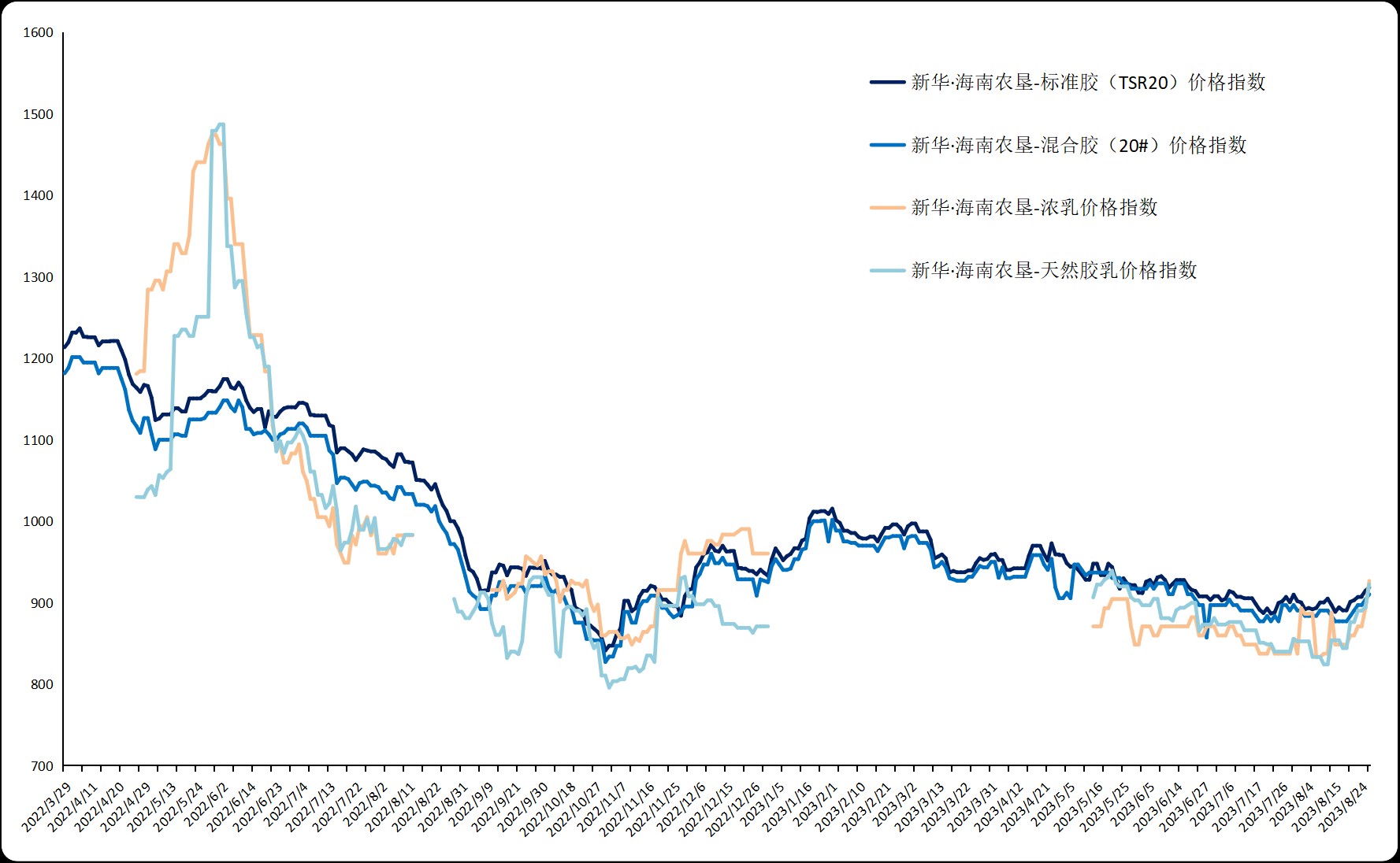
As a critical commodity, natural rubber price fluctuations directly impact every segment of the global rubber industry chain. In 2025, natural rubber prices showed a significant "low first, high later" pattern, influenced by multiple converging factors.
First Half: Price Pressure
In H1 2025, natural rubber prices faced significant downward pressure due to:
- Increased Supply: Improved weather in major producing countries boosted output
- Weak Demand: Slower global economic growth reduced auto sales growth
- Rising Inventories: Rubber stocks in China's Qingdao bonded zone continued to increase
- Synthetic Competition: Lower oil prices made synthetic rubber more cost-competitive

Second Half: Recovery Momentum
Entering H2, the market showed a clear rebound driven by:
- Seasonal Production Decline: Major producers entered the leaf-falling season
- China Auto Market Recovery: Stimulus policies boosted auto production and sales
- Tire Export Growth: Chinese tire manufacturers increased exports to Europe and Americas
- Rising Logistics Costs: Higher shipping rates increased import costs
Short-Term Forecast
Looking ahead, we expect natural rubber prices to oscillate at elevated levels, supported by:
- Persistent global supply-demand gap
- Increasing demand for high-quality natural rubber from EV tire manufacturers
- Rising labor costs in major producing countries
- Sustainability certification requirements increasing production costs
Disclaimer
This article is for reference only and does not constitute investment advice. Natural rubber prices are influenced by many factors, and actual trends may differ from predictions.